
Luxury is one of the most frequently used words in Kuala Lumpur property.
It appears on large urban towers, private low rise developments and projects distinguished mainly by an elaborate lobby. Prices may differ enormously, yet the language used to describe them often sounds remarkably similar.
Marble, concierge service, panoramic views and an infinity pool can all contribute to a refined environment. None of them proves that a condominium will provide an exceptional living experience.
Genuine residential luxury should make daily life quieter, easier and more comfortable. It should offer something difficult to reproduce elsewhere and continue delivering it long after the sales gallery has closed.
A varied market requires better questions
According to the NAPIC Central Region Property Market Report, Kuala Lumpur recorded 10,772 property transactions during the first half of 2026. Residential transactions accounted for 6,618 of them.
The figures reveal an active market, but they do not tell buyers which properties deserve to be called luxurious. The city includes everything from compact serviced apartments to residences occupying an entire floor. Price alone leaves out most of the information that matters.
Imagine two residences offered at a similar price. One has a larger lobby and a longer facility list. The other has only two homes on each floor, a sheltered entrance, a practical kitchen and a view protected by a park. The more useful question is not which one looks expensive. It is what each home provides that would be difficult to find somewhere else.
Privacy is the first serious test
Privacy begins with numbers. Buyers should ask how many residences occupy the land, how many homes share each floor and how many households depend on the same lift. Six lifts serving 200 homes may create a very different evening from six lifts serving 600.
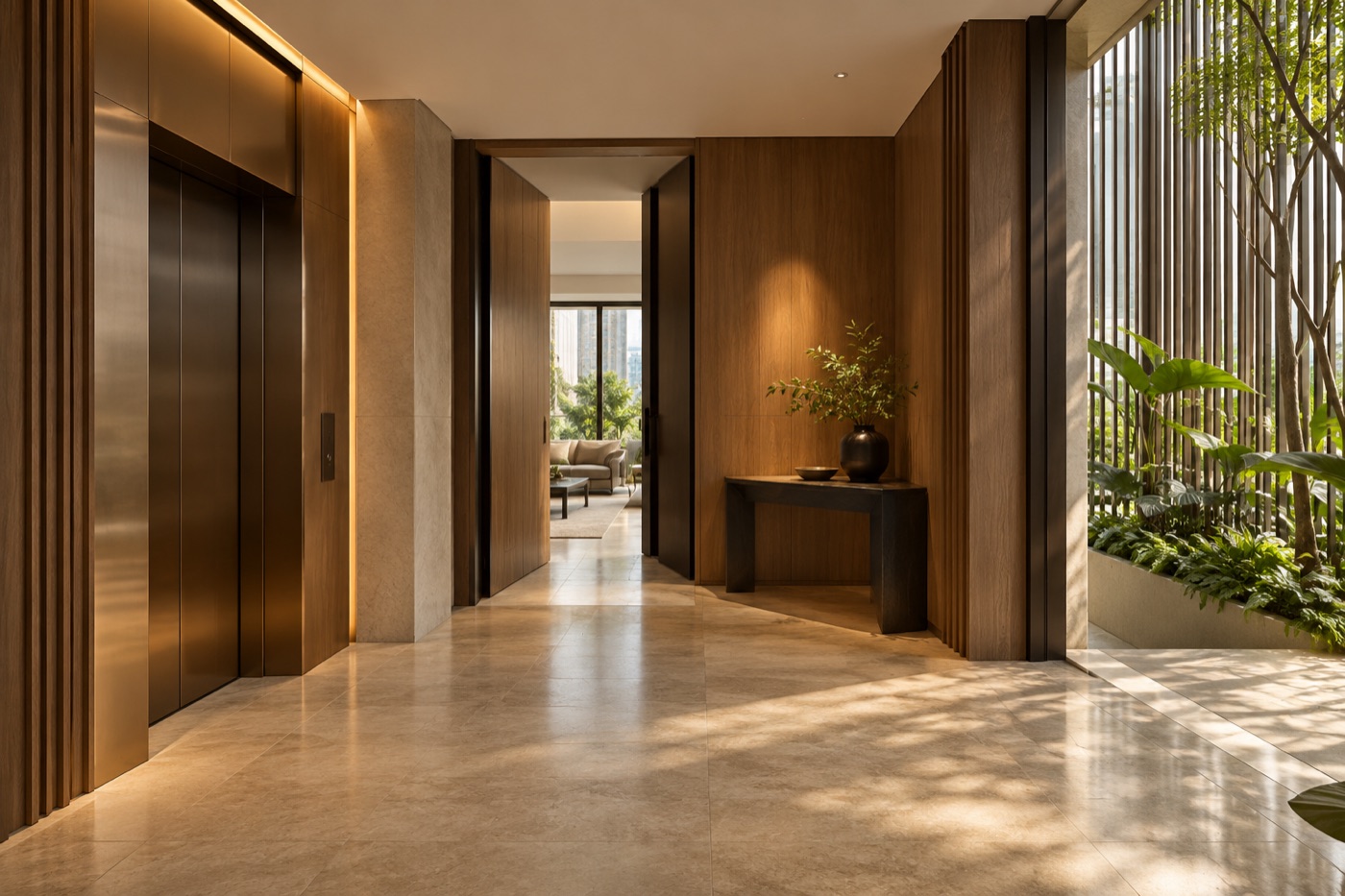
A private lift lobby can help, but the planning around it matters just as much. Consider a resident returning home while a food delivery rider waits outside the same lift and a moving team occupies the corridor. The word private means little if service movement has not been planned.
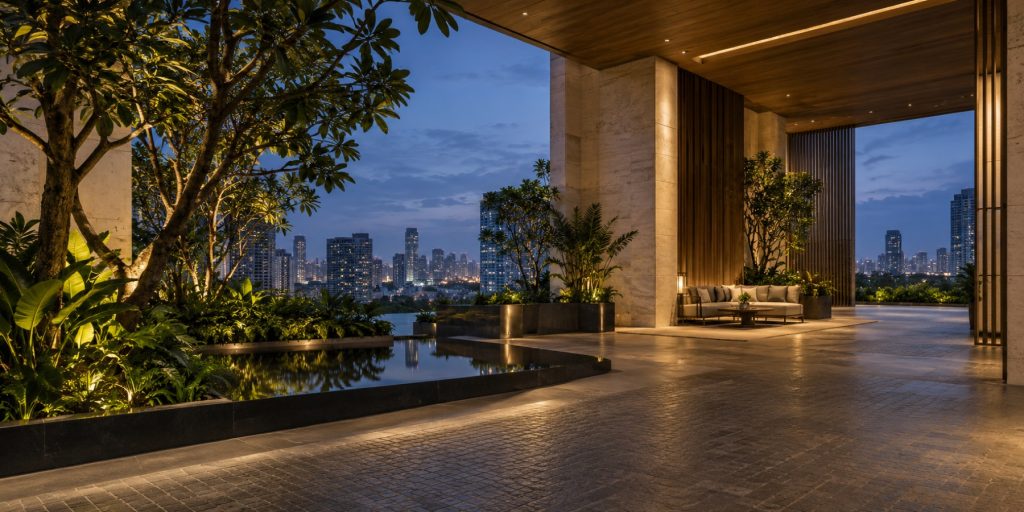
The Peak in Damansara Heights illustrates how scarcity can shape the residential experience. The development comprises 54 low rise residences across approximately 3.94 acres. Its 18 blocks contain three apartments each, with every residence occupying an entire level.
That arrangement creates a different rhythm from a large urban tower. A resident leaving for work is less likely to join a crowded lift queue. A family returning from dinner is less likely to cross a stream of short stay guests. The distinction is practical rather than ceremonial.
Low density is not automatically superior. A smaller community may also mean higher costs shared among fewer owners. It is one part of the lifestyle being purchased, not a complete verdict.
Space should be judged by proportion
The most expensive material in a city condominium may be space, yet a large floor area can still be poorly planned. Long corridors, awkward corners and decorative voids can increase the stated size without improving daily life.
Useful space reveals itself in ordinary situations. Six people should be able to sit around the dining table without blocking the route to the kitchen. A guest should be able to use the bathroom without walking past every bedroom. Luggage, a vacuum cleaner and household supplies should have somewhere sensible to go.
Kitchens, utility areas and laundry rooms deserve the same attention as the living room. A beautiful open kitchen may suit occasional entertaining, but a household that cooks every day may value ventilation, preparation space and a separate wet kitchen far more.
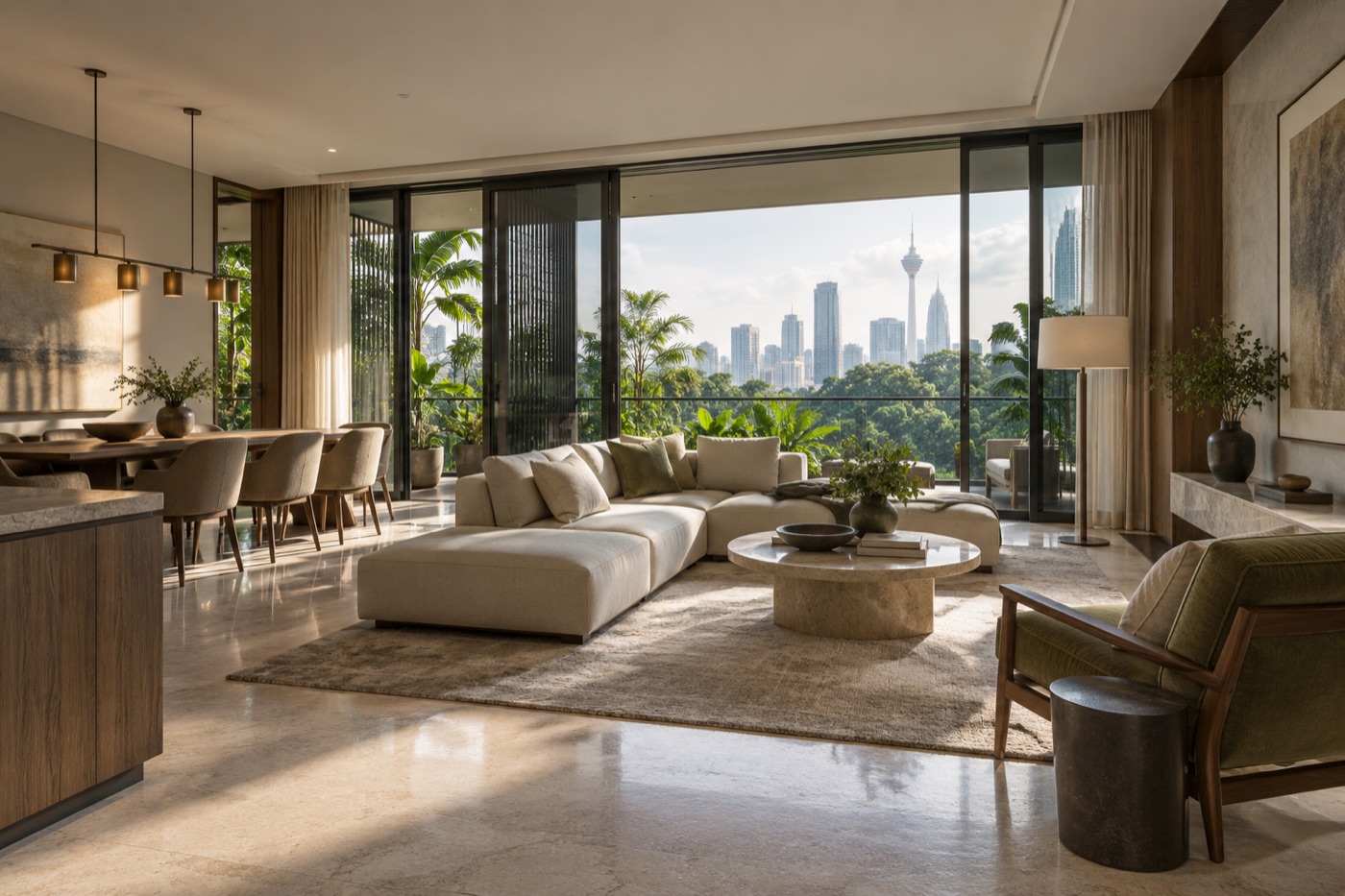
Ceiling height and wide rooms can create generosity when they work with natural light, window placement and furniture planning. A dramatic west facing living room loses much of its appeal if the curtains remain closed every afternoon. A long glass wall is less impressive when it leaves no suitable place for art, shelving or a television.
Floor plans deserve attention before finishes. Good proportions are difficult to change. Marble can be replaced.
The experience begins at the entrance
The final approach to a building can reveal more than its brochure. Visit at seven in the evening and observe the access road, guardhouse, vehicle queue and visitor registration process. A grand gate is not useful if residents spend ten minutes waiting behind guests and delivery vehicles.
Rain is another useful test. During a tropical downpour, can two cars unload passengers without blocking the driveway? Can a child, an elderly parent or someone carrying shopping reach the lobby without getting wet? A Kuala Lumpur residence should work in Kuala Lumpur weather.
Inside, the lobby should support movement rather than simply create spectacle. A smaller entrance where the doorman recognises residents, parcels are handled discreetly and conversations do not echo across the room can feel more refined than a vast marble hall.
Location is a form of scarcity
A valuable address should provide an advantage that cannot easily be reproduced. The advantage may be a protected park view, mature greenery, immediate rail access, proximity to international schools or unusual seclusion within the city. Its value becomes clearer when it changes a resident’s routine.
In KLCC, someone may walk through the park before breakfast and reach an office meeting without entering a car. Yet individual experiences vary. One residence may face open greenery while another looks toward a future development site or a neighbouring tower at close range.
TRX offers a different proposition. The 70 acre district brings offices, residences, retail, dining, public space and Kuala Lumpur’s principal MRT interchange together. For a resident who works nearby or uses rail daily, that integration can return hours to the week.
Damansara Heights offers mature surroundings and a quieter urban setting. U Thant and Ampang Hilir provide greenery and embassy surroundings. Bangsar combines established residential character with neighbourhood life. Mont Kiara can simplify school runs and family routines, while Bukit Bintang suits someone who wants restaurants and hospitality within walking distance.
No district guarantees a luxurious home. The best address is the one whose advantages match the way its resident actually lives.
A high floor does not guarantee a valuable view
The direction of a view matters as much as its height. A west facing skyline may glow at sunset but also fill the living room with heat. A lower apartment facing mature trees may feel cooler, quieter and more private than a higher unit facing another tower.
Buyers should also ask whether the outlook is likely to survive. An empty parcel can look wonderfully open during a sales visit and become a construction site two years later. A park, protected institutional land or a carefully planned setback may offer greater confidence.
Visit in the morning, late afternoon and after dark. Open the balcony door. Listen for traffic, rooftop machinery and nearby entertainment. The best view is not always the most dramatic photograph. It is the one a resident will still enjoy on a quiet Sunday morning.
Service must solve real problems
Branded residences have introduced hospitality language into the residential market. Four Seasons Private Residences Kuala Lumpur is one example. It includes 242 private residences within a 65 storey mixed use tower beside KLCC Park.
Professional assistance can be valuable for an owner arriving on a late flight, arranging a car for a guest or asking for help before an extended trip. The real benefit is not the name above the entrance. It is the confidence that a request will be understood and handled properly.
Buyers should understand which services are included, which carry additional charges and how residences are separated from hotel activity. They should ask who manages the property and what happens if that arrangement changes. A reception desk is not necessarily a concierge service.
Management determines whether quality survives
A new condominium has an obvious advantage. Everything is clean, recently landscaped and presented according to the developer’s vision. The more revealing moment arrives in year five.
By then, the question is whether a faulty lift is repaired quickly, water stains are investigated rather than painted over and worn furniture is replaced before the lobby begins to look neglected. These decisions reveal the standards of the management team and the priorities of the owners.
Established buildings offer evidence. Visit the car park, not only the lobby. Look at the service corridor, pool changing room and notice boards. Speak with residents and review maintenance charges, sinking fund information, management records and planned expenditure.
A well managed property can become more desirable with age because buyers can see that its promise has survived. Poor operations can diminish an impressive building surprisingly quickly.
Facilities should earn their place
A thoughtful swimming pool, capable gym, private lounge and landscaped garden may provide more value than dozens of lightly used rooms. The test is simple: can residents use them comfortably at the times they are most likely to visit?
A beautiful pool that loses the sun early, a gym with six treadmills but no space to stretch and a function room beside a bedroom stack all look better on a facility plan than they may feel in practice. Visit on a Saturday afternoon if possible.
The same principle applies to smart home systems. Lighting controls, access systems and cooling should remain easy to operate and service. Technology is useful when it disappears into the routine, not when every small fault requires a specialist visit.
Price is evidence of demand, not proof of quality
A high price per square foot may reflect land cost, location, scarcity, branding and market timing. It does not guarantee a better home. Buyers are not choosing an abstract ranking. They are deciding which advantages deserve a premium in their own lives.
For a frequent traveller, a smaller KLCC residence with dependable service may be more luxurious than a larger home requiring constant attention. For a family, a generous utility area, short school run and safe outdoor space may matter more than a celebrated hotel brand. For someone who hosts often, a proper dining room and discreet service access may justify more than another swimming pool.
The final test is an ordinary Tuesday
Picture an ordinary Tuesday. A thunderstorm begins just as the resident reaches home. The driveway is busy, a delivery is arriving and guests are expected for dinner.
In a genuinely luxurious building, none of this becomes an event. The guardhouse keeps traffic moving. The covered entrance works. The delivery follows a separate route. The lift arrives promptly. Groceries disappear into practical storage, guests sit comfortably and the city remains present beyond the windows without overwhelming the room.
No single detail creates that experience. It comes from architecture, operations and dozens of decisions made with the resident in mind.
That is why the most convincing luxury can feel almost invisible. Nothing asks for attention because everything works. Remove the brand name, the launch event and the promotional images. If the home still makes a difficult day feel easier, its claim of luxury has substance.